
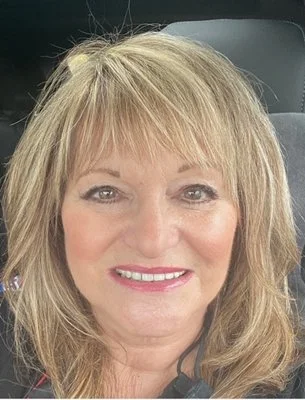
Meet a TwinBridger: Roni Basle
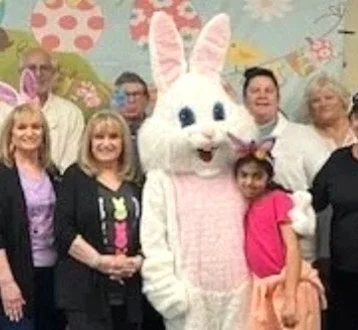
At the Easter Bunny Breakfast
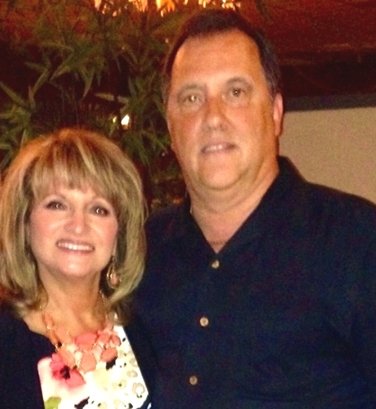
Roni and husband Ed
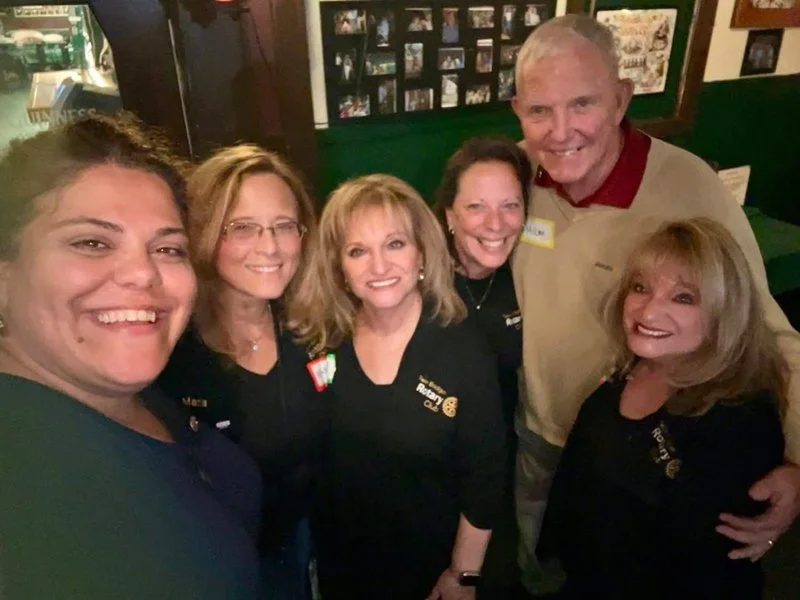
Roni and friends
By Richard Landers
March 2026
Helping others is something Roni Basle loves and is good at. In fact, she spent an entire career helping young people and, with Twin Bridges, she has continued helping others, this time folks of all ages.
Roni grew up in Albany and now lives in Latham with her husband Ed. As a child, she lived near the Jewish Community Center in Albany and found lots of activities to do there. She has a twin sister, Debbie and those two have been very close their entire lives.
“I enjoyed being a twin but of course I didn’t know anything different. We talk frequently, do things together and have the same friends,” Roni said. The two sisters joined Twin Bridges at the same time several years ago. Roni went to the first meeting to accompany her sister but had no intention of joining herself. “I loved the people and what they were accomplishing—so I joined too.”
Roni knew what she wanted to do as a career from an early age—she majored in elementary education at Buffalo State College and then found her niche at the College of Saint Rose where she completed a master’s degree in special education.
Her career spanned 35 years in the Albany city school system, always in special education and mostly as a reading specialist. Her students had a variety of disabilities, most often learning disabilities but some mentally challenged youngsters as well.
Asked about the qualities a special education needs, Roni says, “you have to have a lot of patience and tolerance and you need to take their feelings into account.” Also required are different methods of teaching because these children learn differently.
For most of her teaching years, Roni taught in the “Resource Room.” According to ChatGPT, “A resource room is a specialized, small-group educational setting within a school where students with disabilities or learning differences receive targeted, specialized instruction for part of the day. It provides a quieter, less-restrictive environment to build skills in reading, writing, or math while allowing students to remain in general education for the majority of the day.” The Resource Room allowed Roni to have smaller classes, usually five or six students. For Roni, reading was always key.
“You also have to meet the parents where they are,” Roni said, “so they can understand what you’re saying and then help their child progress, which is what we all want.” At times, parents need handholding, especially when the child has just been diagnosed. “We worked with the parents and tried to get them to use the same strategies at home that we did at school.” Those strategies included the teaching of reading and writing.
Behavior modification (a systematic approach to changing someone’s actions using reinforcement and consequences) was also used in the Resource Room. “I would give them incentives--I had a behavior chart and they could get stars for good behavior and after 10 stars they could pick something from a prize box.” Roni was the recipient of a reading teacher award from the Reading Council after she helped to develop a specialized writing program. It is safe to say, Roni exemplifies someone who loves to help others, especially those less fortunate than herself.
Speaking of awards, at Twin Bridges Roni is a former recipient of the Rotarian of the Year award. She especially enjoys the hands-on work of the Club such as buying holiday gifts for area children with the Chamber Angels, monthly visits with the seniors at the Home of the Good Shepherd, the holiday breakfast events and building beds for area kids who don’t have one.
What’s next for Roni at Twin Bridges?
“I’d like do some events to show people what we’re doing, the impact we have and how much fun we have doing it,” she says. “I’d love getting more people involved with us.”